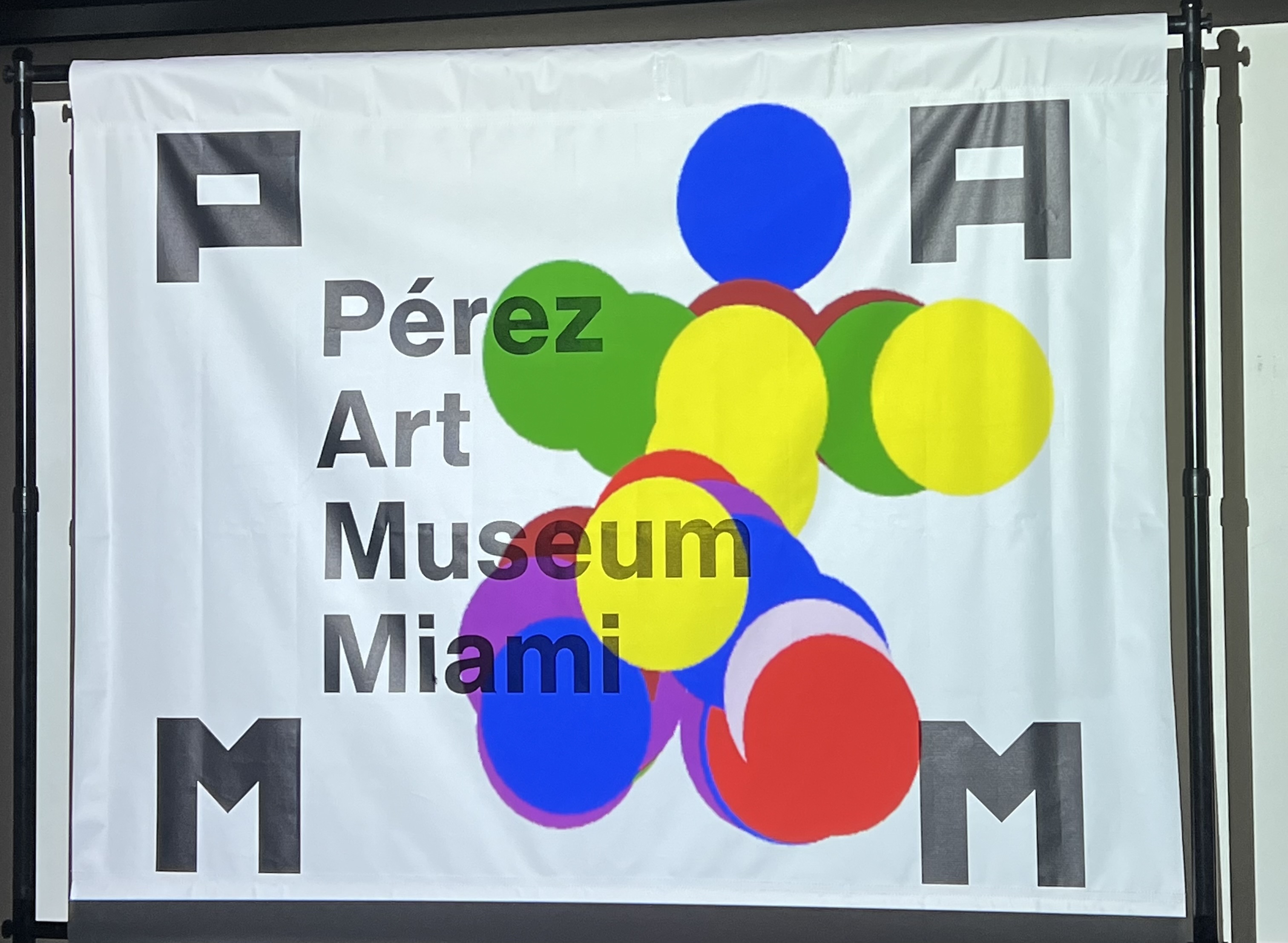
From a forty-five-minute call to a polka dot immersive experience, Yayoi Kusama is a known Japanese contemporary artist that reveals her feelings through eye-catching works of art using repetitive dots, pumpkins, and mirrors. Kusama's work leads any audience to step into her mind and thoughts, making it more than just an exhibition but a world of illusions. "With just one polka dot, nothing can be achieved. In the universe, there is the sun, the moon, the earth, and hundreds of millions of stars," Kusama has mused. If I had to find words to describe how my project came to life, I would say jumping into the unknown. At the start of my spring internship, the Director of Digital Engagement and my supervisor, Jay Mollica, and I had a forty-five-minute conversation about what ideas I wanted to fulfill during my time at Pérez Art Museum Miami. I remember telling him I wanted to do something interactive because I kept seeing it in different museums, and I thought it'd be a great idea to try and bring one to PAMM as well. Of course, in my mind, everything seemed more manageable than it was. Still, it wasn't until Jay told me he did not know much about interactive video mapping that I realized I did not have the knowledge on the subject either. Still, it was already too late (at least for me) because I would've already decided on this project and knew that whatever it took, I would make it happen.
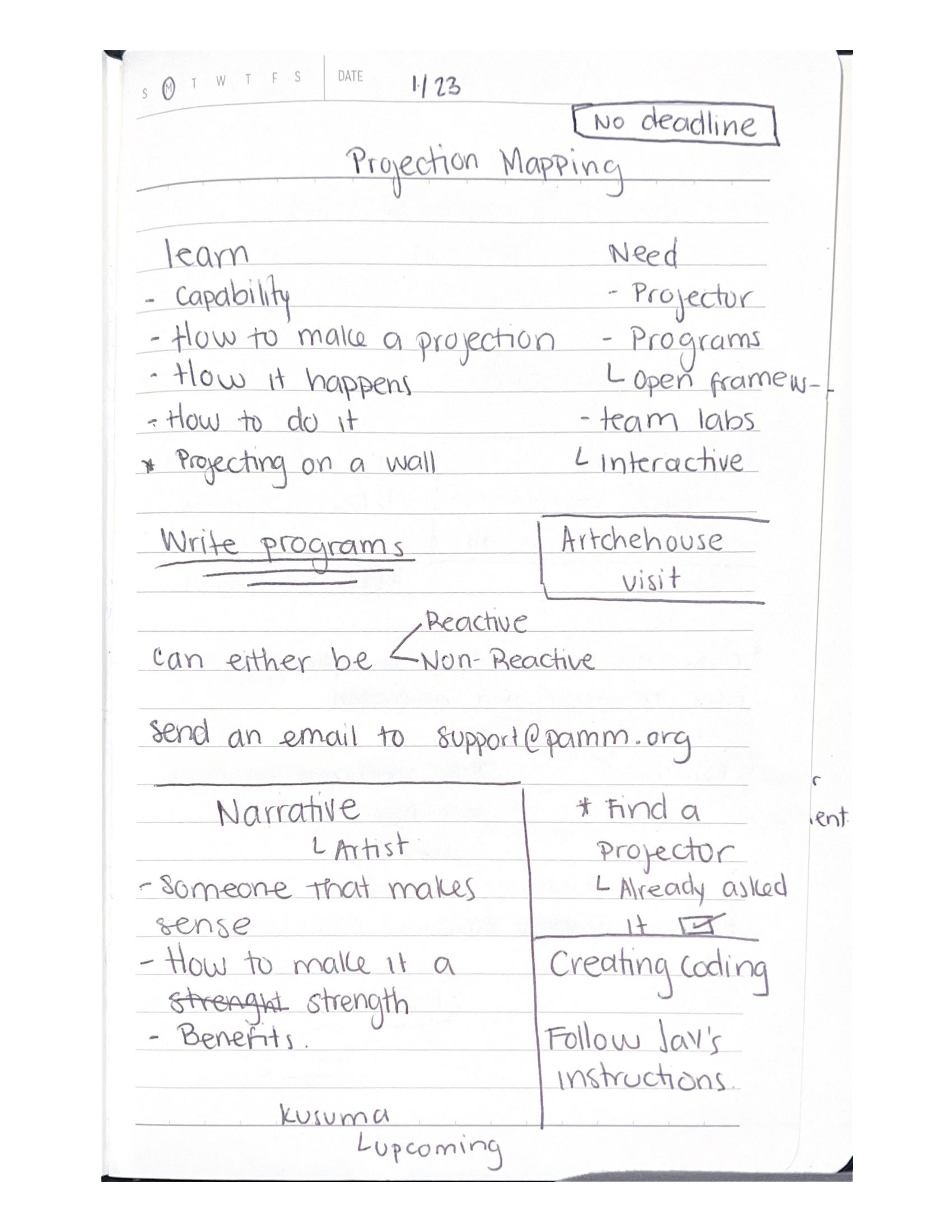
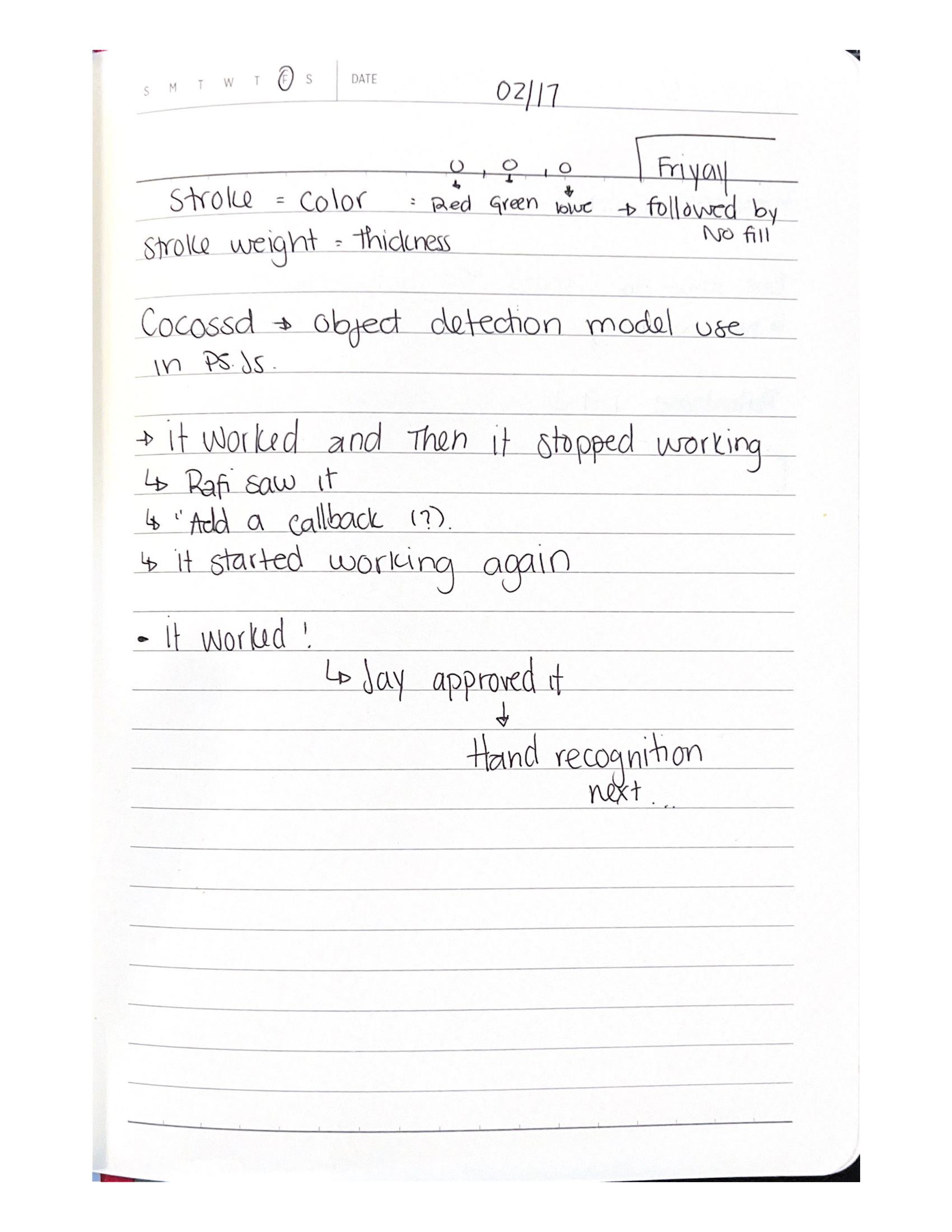
In the following weeks, I got the opportunity to meet the rest of the Digital Engagement team and start working on my project. I started watching videos and writing different ideas for approaching my project. Every day for a month, I wrote in my little journal updates and things I was accomplishing. At first, I didn't remember having a concrete idea of what I wanted my project to look like because I thought I would use a program called Touch Designer (which I used just once). When I did my first sketch, I realized doing something with shapes was going to be the easiest approach to my project, but what shape could I use that could also be related to an artist's work was the big question, to my advantage Kusama was opening her latest exhibition "Love is calling" at PAMM. A dark mirrored room illuminated by inflatable, tentacle-like forms covered in Kusama's characteristic polka dots, my answer was right in front of my eyes because, after that moment, I chose polka dots to be the main feature of my project. After a month and a half of going in circles, Jay sat me down and told me to use a JavaScript library called ML5. From there, I remember staring at my computer for hours, watching videos, and reading codes I knew I did not understand. Still, I was too afraid to give up on the project that I had chosen in the first place. Livio Zanardo, the web developer, and my coworker at PAMM spent time with me explaining and going through the program, making sure I felt comfortable enough to start working on my project by myself. In the first two weeks, I had half of the project done because that was the easiest part, and even then, I was really proud of having at least one small thing to show to my team. Hearing "Wow," "You are doing really good," and "We're so proud of you" was a motivation and a reassurance that I wasn't in this boat alone and that no matter what, I would have people supporting every step even if it was a small one.
"How in the actual world am I going to make this dot stick?" that was the question I kept asking myself, Livio, and my other coworker Patrick Fox, the data analyst, for two weeks and a half. I kept watching videos and trying different codes, but I felt like I was in a rabbit hole and would never see the light at the end of the tunnel. It wasn't until one random afternoon Jay heard me talk with Patrick about the project that he sat down with me and taught me a different approach to my problem. "Object-oriented programming," he said; of course, my immediate response was, "UHH?" because if I had been confused before, now I felt like I would never finish my project. To my surprise, it wasn't as complicated as I thought it would be, but here's the tricky part, it was easy to do it next to Jay, but the moment I had to do it by myself, my brain went back to point 0. I did everything wrong, but at least I made the first dot stay, so that was a big win after spending weeks wondering if I was good enough for my project. "Oh wow, this is working somehow; what's next?" was the question for the following days until one Thursday afternoon Jay and I sat together at his office and applied object-oriented programming to my code. Words can't even explain the relief I felt when I saw that he closed his hand, and the first polka dot stayed, and he reopened his hand, and a second one appeared and stayed when he closed his hand again. Now I am sure the project is done. We are just missing random colors whenever you open your hand again. "That must be the easiest part."
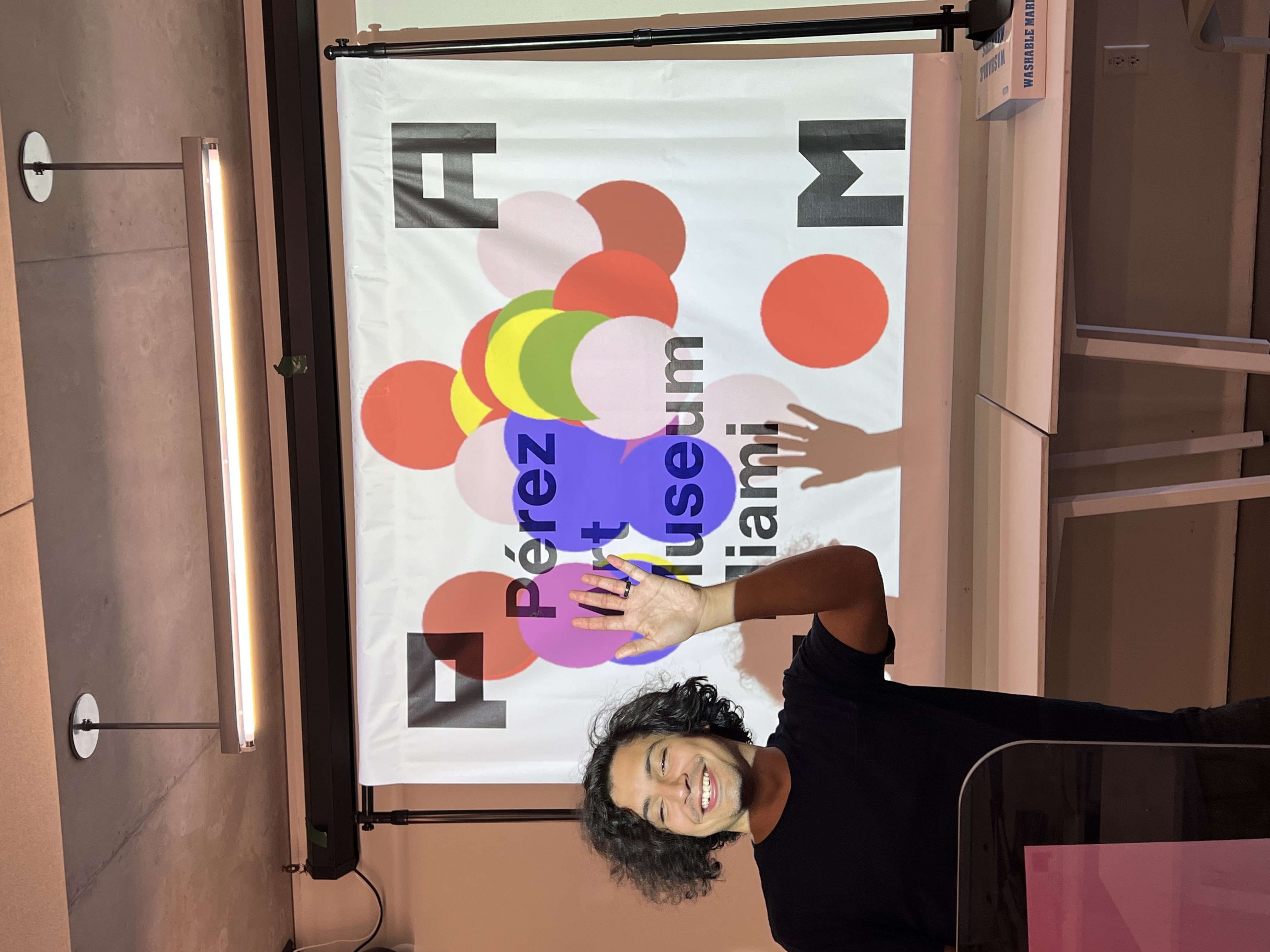
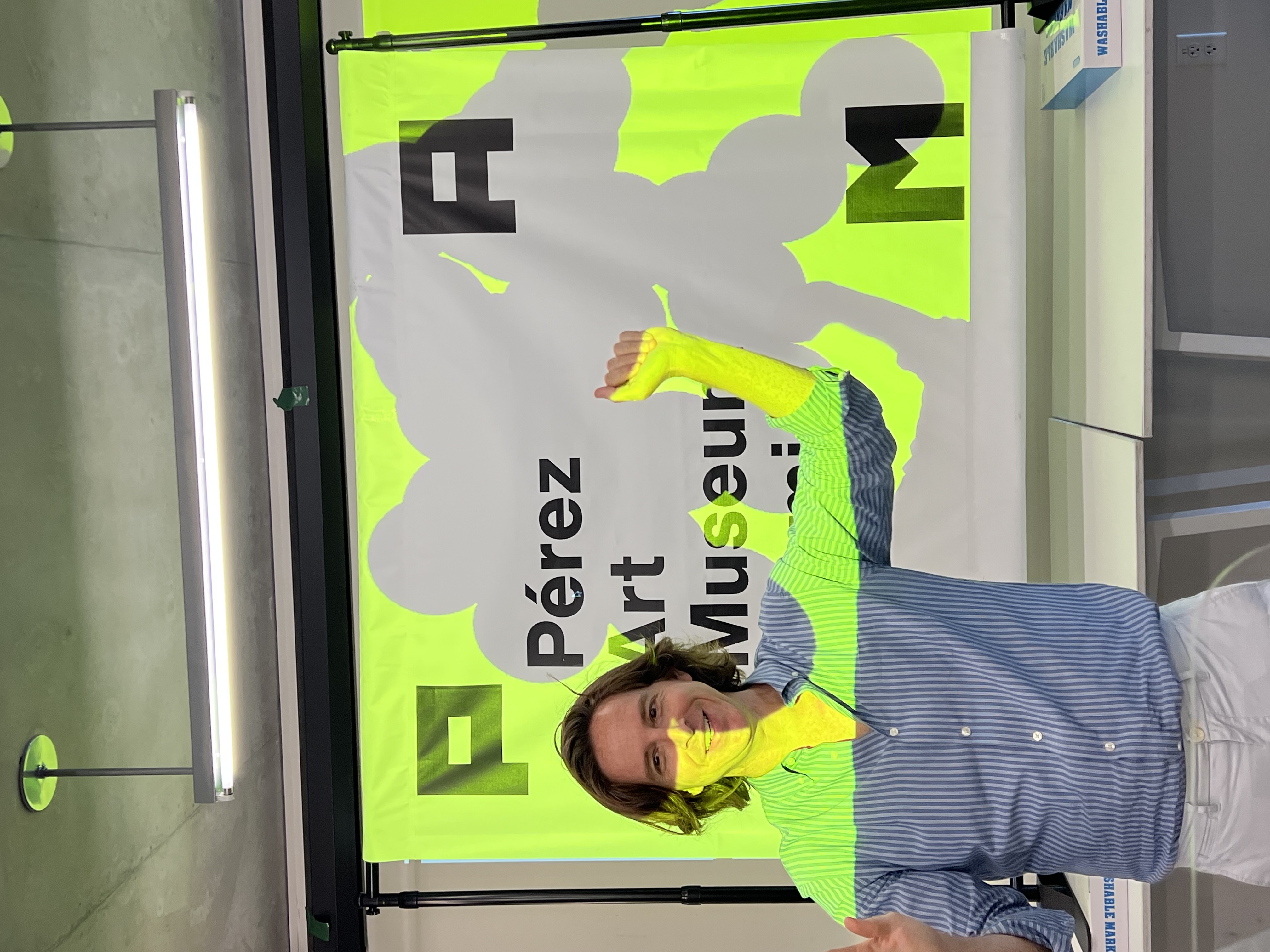
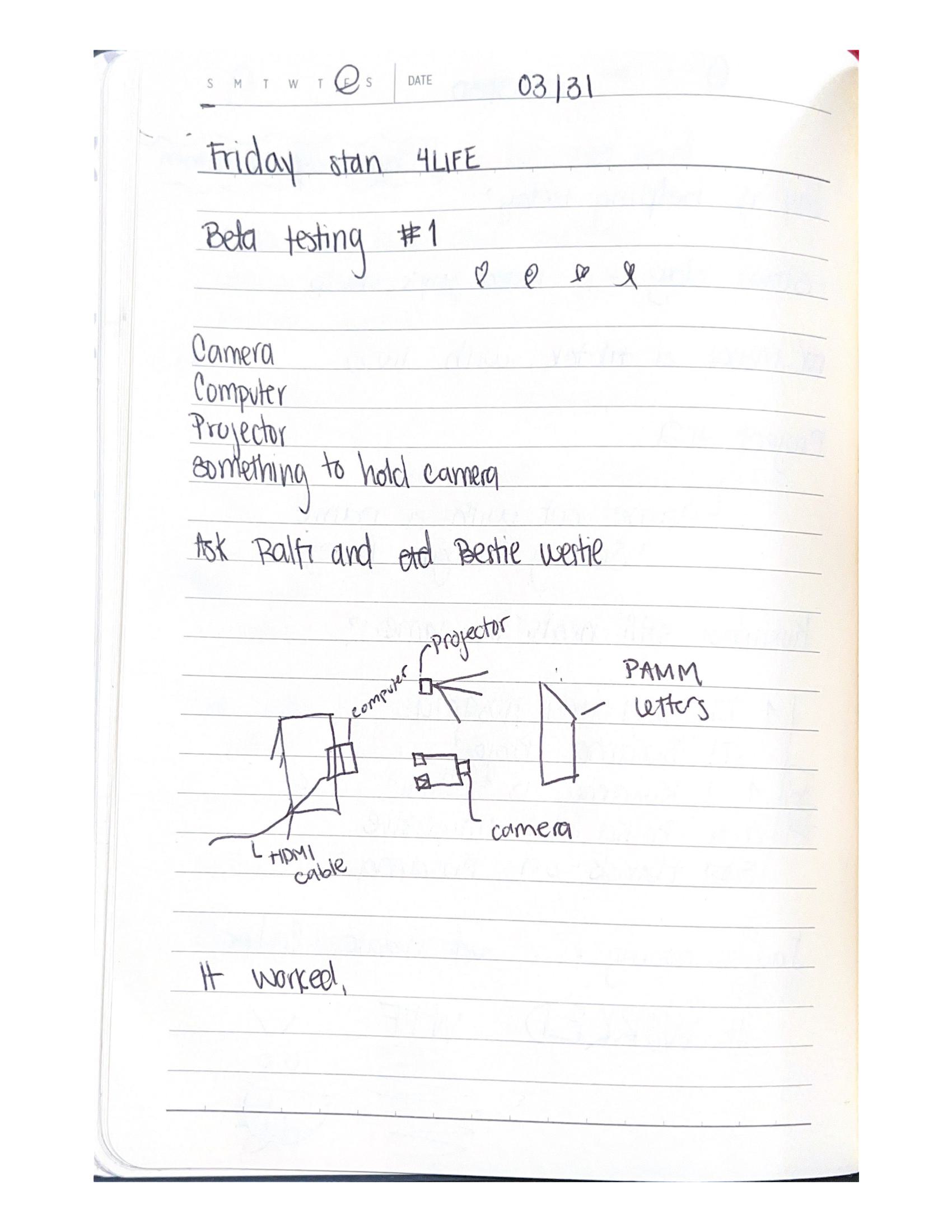
No, it was not, but I was missing five or six lines of code that Jay and I wrote the following week, and finally, after two months, "Hands-on-Kusama" was officially done, and it was time to start our beta testing. Proud and happy to say that my team and other people in the office liked the project as much as I did. After all, this was the perfect learning process and time for me to understand that nothing in this life is impossible. I could not have done this without the fantastic mentorship and support I received from my team during the process. Quoting Kusama, "With just one idea of a polka dot project, nothing can be achieved. In the universe, there is perseverance, the infinite world of unknown possibilities, my team, and hundreds of millions of opportunities".